
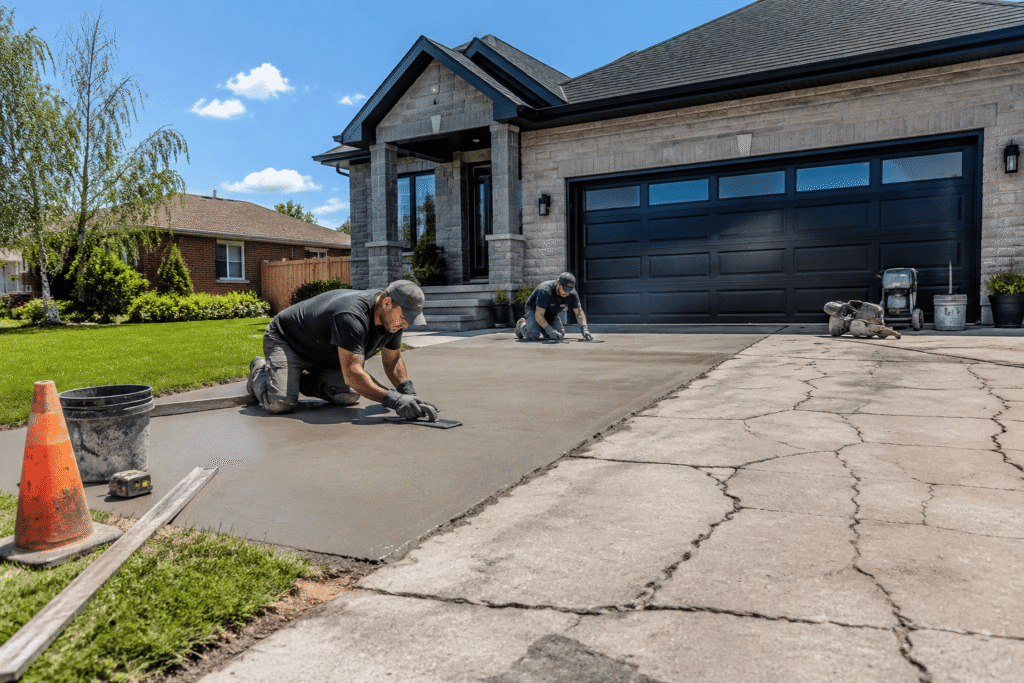
Concrete is one of the most durable materials used around a home, but it’s not indestructible. Over time, exposure to Ontario’s freeze-thaw cycles, moisture, heavy loads, and natural aging can cause driveways, patios, sidewalks, and foundations to deteriorate. Residential concrete repair becomes essential when these issues begin affecting the safety, appearance, and structural integrity of your property.
Many homeowners ignore early warning signs because the damage appears minor. Unfortunately, what starts as a small crack or slight surface wear can quickly turn into a safety hazard and a much more expensive repair.
If you’ve noticed cracks, uneven slabs, or crumbling concrete around your property, now is the time to take a closer look. Early intervention can extend the life of your concrete, improve curb appeal, and prevent complete replacement.
In this guide, you’ll learn the 10 most common signs your residential concrete needs professional Residential Concrete Repair, why these issues occur, when repairs are enough, and when replacement may be the better investment. We’ll also explain what homeowners in Kitchener, Waterloo, Cambridge, and Guelph should watch for due to Ontario’s unique climate.
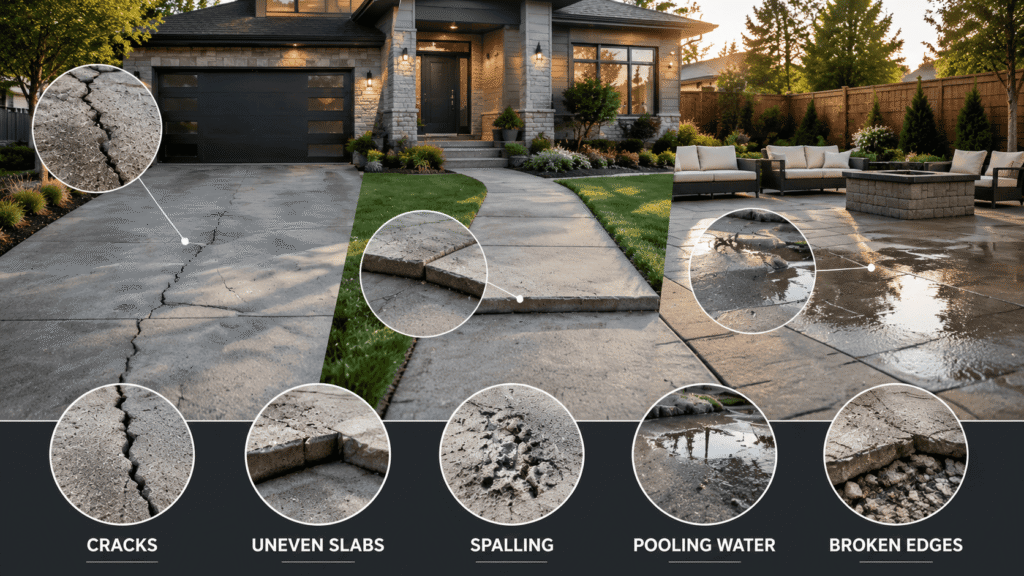
Residential concrete repair is necessary when you notice expanding cracks, uneven slabs, sinking surfaces, spalling, exposed aggregate, water pooling, crumbling edges, moisture-related discoloration, or loose concrete sections. Repairing these problems early helps prevent structural deterioration, improves safety, extends the lifespan of your concrete, and reduces long-term replacement costs.
Why Early Concrete Repairs Matter
Concrete damage rarely fixes itself.
Small imperfections allow water to penetrate beneath the surface. During Ontario winters, that trapped moisture freezes, expands, and creates even larger cracks. As this cycle repeats year after year, minor cosmetic damage can eventually weaken the slab’s structural integrity.
Professional Residential concrete repair provide several long-term benefits:
- Prevent costly full slab replacement
- Improve safety by eliminating trip hazards
- Restore your home’s curb appeal
- Protect surrounding landscaping
- Extend the lifespan of existing concrete
- Prevent moisture from reaching the base material
- Maintain property value
For homeowners across Kitchener, Waterloo, Cambridge, and Guelph, proactive maintenance is especially important because seasonal temperature swings accelerate concrete deterioration.
What Causes Residential Concrete Damage?
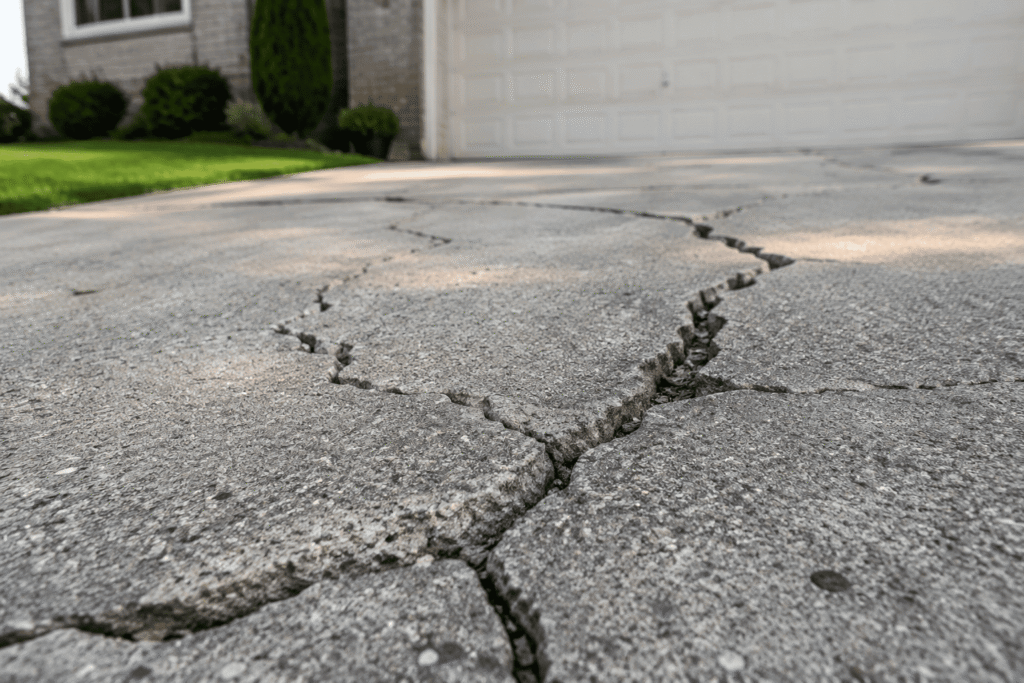
Before identifying warning signs, it’s helpful to understand why concrete fails.
Freeze-Thaw Cycles
Residential Concrete Repair is often necessary in Ontario because the province experiences repeated freezing and thawing throughout the winter. Water enters tiny pores and cracks in concrete, freezes, expands, and gradually breaks the surface apart, leading to damage that worsens over time if left untreated.
Poor Drainage
Standing water weakens the soil beneath concrete slabs, causing sinking, settlement, and cracking.
Tree Root Growth
Roots growing underneath sidewalks, patios, or driveways create upward pressure that lifts and fractures concrete.
Heavy Vehicle Loads
Residential driveways not designed for heavy trucks or RVs may crack under excessive weight.
Soil Settlement
As soil naturally shifts or becomes compacted over time, concrete loses support and begins to sink unevenly.
Aging
Even professionally installed concrete has a lifespan. Years of weather exposure slowly reduce its strength and appearance.
10 Signs Your Residential Concrete Needs Professional Repair
1. Cracks Keep Getting Larger
Hairline cracks are common as concrete cures and ages.
However, cracks that continue growing in length or width usually indicate movement beneath the slab or ongoing structural stress.
Warning signs include:
- Cracks wider than 1/8 inch
- Multiple intersecting cracks
- Long continuous cracks
- Water collecting inside cracks
- Weed growth emerging from cracks
Ignoring expanding cracks allows moisture to penetrate deeper into the concrete, accelerating deterioration.
Professional Solution
An experienced contractor evaluates whether the crack is cosmetic or structural before recommending crack sealing, epoxy injection, polyurethane residential concrete repair, or partial slab replacement.
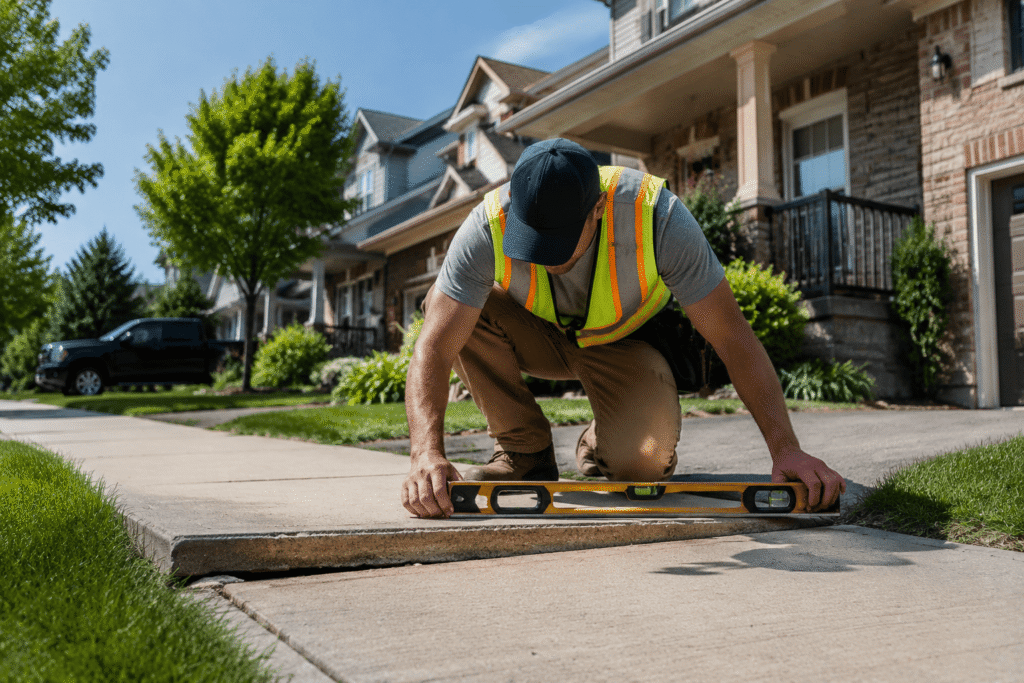
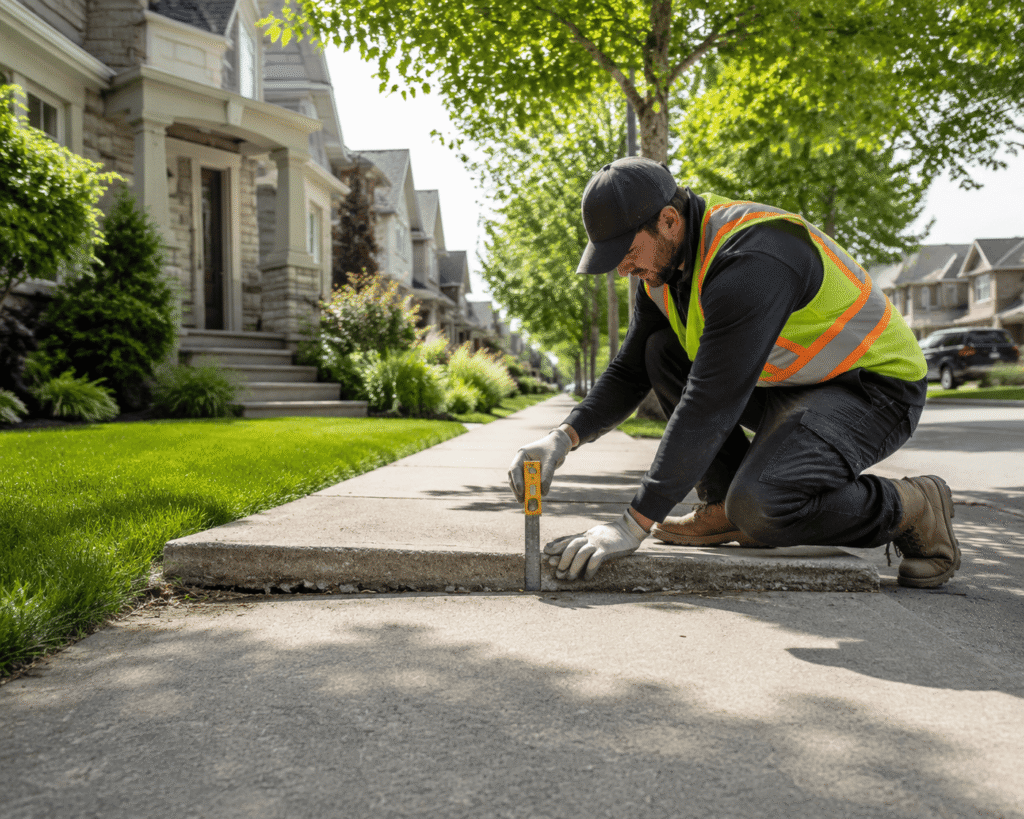
2. Uneven or Sunken Concrete
If one section of your driveway, walkway, or patio sits lower than another, settlement has likely occurred beneath the slab.
Common symptoms include:
- Trip hazards
- Standing water
- Noticeable height differences
- Rocking patio furniture
- Garage floor misalignment
Uneven concrete often results from:
- Soil erosion
- Poor compaction
- Water infiltration
- Underground voids
Rather than replacing the entire slab, professional leveling techniques may restore the surface while preserving existing concrete.
Why This Matters for Ontario Homes
Homes throughout Kitchener, Waterloo, Cambridge, and Guelph often experience soil movement due to seasonal moisture changes and freeze-thaw conditions. Catching settlement early can prevent additional damage to surrounding slabs and landscaping.
3. Surface Flaking or Spalling
Spalling occurs when the top layer of concrete begins peeling, chipping, or flaking away.
This usually happens because moisture enters the concrete and repeatedly freezes.
Signs include:
- Rough surface texture
- Missing patches
- Exposed stone
- Dusting concrete
- Scaling during winter
Besides looking unattractive, spalling exposes deeper layers of concrete to further moisture damage.
Professional Solution
Depending on severity, contractors may recommend:
- Surface resurfacing
- Concrete overlays
- Patch repairs
- Protective sealers
- Partial replacement
4. Water Pooling After Rain
Concrete should shed water away from your home—not collect it.
If puddles remain hours after rainfall, your concrete may have developed settlement or drainage issues.
Standing water can lead to:
- Faster freeze-thaw damage
- Foundation moisture problems
- Surface deterioration
- Mold growth nearby
- Increased slipping hazards
Professional grading corrections and concrete leveling can often solve drainage issues before major structural damage occurs.
Mid-Article Tip
Not every crack or surface blemish means you need a complete replacement. A professional inspection can determine whether targeted residential concrete repairare enough to restore strength and appearance—potentially saving thousands compared to replacing an entire driveway or patio.
If you’re noticing any of these warning signs around your home in Kitchener, Waterloo, Cambridge, or Guelph, scheduling an assessment with PurePour Concrete can help you understand the condition of your concrete and the most cost-effective residential concrete repairoptions before the damage worsens.
5. Crumbling or Broken Edges
The edges of driveways, sidewalks, and patios are particularly vulnerable because they receive less structural support than the center of the slab.
Damage often starts gradually but becomes more noticeable over time.
Look for:
- Chipped corners
- Broken driveway edges
- Loose concrete pieces
- Eroding sidewalk borders
- Exposed aggregate along the perimeter
Common causes include:
- Vehicle tires driving over unsupported edges
- Freeze-thaw expansion
- Soil erosion
- Snowplow or landscaping equipment impacts
- Water infiltration beneath the slab
Once edge deterioration begins, it typically spreads inward if left untreated.
Professional Repair Options
Depending on the severity of the damage, contractors may recommend edge rebuilding, patch repairs, Residential Concrete Repair, concrete resurfacing, or partial slab replacement to restore both appearance and structural integrity.
Residential Concrete Repair vs. Replacement: Which Is the Better Option?
| Situation | Professional Repair | Full Replacement |
|---|---|---|
| Hairline cracks | ✅ Usually | ❌ Rarely |
| Minor settlement | ✅ Often | ❌ Usually unnecessary |
| Surface spalling | ✅ Yes | Sometimes |
| Water pooling | ✅ Often | Occasionally |
| Extensive structural failure | ❌ Limited benefit | ✅ Recommended |
| Multiple broken slabs | ❌ Usually not enough | ✅ Best solution |
In many cases, early repairs are significantly more affordable than replacing an entire concrete surface. The key is addressing problems before they spread.
6. Rust Stains or Exposed Reinforcement
Concrete is often reinforced with steel rebar or wire mesh to improve strength. When moisture penetrates deep enough, the steel can begin to rust, expand, and push outward against the concrete.
Warning Signs
- Rust-colored stains on the surface
- Cracks running in straight lines
- Pieces of concrete breaking away
- Exposed metal reinforcement
- Bulging sections of concrete
Residential Concrete Repair becomes essential when damage goes beyond cosmetic concerns. Corroding reinforcement weakens the concrete slab from the inside, compromising its structural integrity, and should be evaluated by a professional before the problem worsens.
Professional Solution
Depending on the severity, contractors may:
- Remove damaged concrete
- Treat or replace corroded reinforcement
- Rebuild affected sections
- Apply protective sealers to reduce future moisture intrusion
7. Multiple Small Cracks (Alligator Cracking)
A network of interconnected cracks that resembles alligator skin is a sign that the concrete is under significant stress.
Unlike isolated cracks, this pattern usually indicates that the slab or its base is failing.
Common Causes
- Weak sub-base
- Poor installation
- Heavy vehicle traffic
- Repeated freeze-thaw cycles
- Soil movement
Because the underlying support has often been compromised, simply filling the cracks is rarely a long-term solution.
Professional Recommendation
A concrete contractor can determine whether slab stabilization, partial replacement, or complete reconstruction is the most cost-effective option.
8. Concrete Is Becoming Slippery or Worn Smooth
Years of foot traffic, vehicle use, snow removal, and weather exposure gradually wear away the textured surface of concrete.
A polished, smooth finish may seem harmless, but it can become dangerously slippery when wet or icy.
Areas Most Affected
- Front walkways
- Pool decks
- Patios
- Entry steps
- Driveways with slopes
Residential Concrete Repair Options
Professionals may recommend:
- Surface grinding
- Concrete resurfacing
- Slip-resistant coatings
- Decorative overlays with added texture
- Protective sealers
These repairs improve both safety and appearance.
9. Your Concrete Looks Old, Faded, and Worn Out
Concrete doesn’t have to be structurally damaged to benefit from residential concrete repair.
Years of UV exposure, road salt, moisture, and weather can leave concrete looking tired and neglected.
Signs of Aging Concrete
- Faded color
- Uneven appearance
- Surface staining
- Minor pitting
- Worn decorative finishes
Although cosmetic issues don’t always indicate structural failure, they can reduce curb appeal and make your property appear poorly maintained.
Professional Repair Options
Depending on the condition of the slab, contractors may recommend:
- Concrete resurfacing
- Decorative overlays
- Staining
- Sealing
- Minor patch repairs
These solutions often restore the appearance of concrete without the cost of replacement.
10. Your Concrete Is More Than 20 Years Old and Showing Wear
Concrete can last for decades when properly installed and maintained.
However, many residential concrete surfaces begin showing signs of deterioration after 20 to 30 years—especially in climates like Southern Ontario.
Ask Yourself:
- Are cracks becoming more frequent?
- Has the surface become uneven?
- Does water collect after rain?
- Is the concrete harder to maintain every year?
If you answered “yes” to several of these questions, it’s a good time to schedule a professional inspection.
An experienced contractor can determine whether repairs will extend the slab’s lifespan or whether replacement offers better long-term value.
Should You Repair Concrete Yourself?
Small cosmetic repairs can sometimes be handled by homeowners, but many concrete issues require professional expertise.
| DIY Repair | Professional Repair |
|---|---|
| Filling tiny hairline cracks | Structural crack repair |
| Cleaning stains | Concrete leveling |
| Applying concrete sealer | Spalling repair |
| Minor surface patching | Large crack stabilization |
| Basic maintenance | Settlement correction |
DIY Is Appropriate For
- Cleaning
- Applying sealers
- Filling very small non-structural cracks
- Routine maintenance
Call a Professional When
- Cracks continue growing
- Concrete is sinking
- Water pools on the surface
- Multiple slabs are damaged
- Reinforcement is exposed
- Large sections are breaking apart
Attempting to residential concrete repairstructural problems without addressing the underlying cause often results in recurring damage.
Common Mistakes Homeowners Make
Avoiding these common mistakes can save significant money over time.
Waiting Too Long
Small repairs are almost always less expensive than major reconstruction.
Ignoring Drainage Problems
Water is one of concrete’s biggest enemies. Fixing drainage issues helps prevent recurring damage.
Using Cheap Patch Products
Not all residential concrete repairmaterials are designed for long-term performance or Ontario weather conditions.
Repairing Only the Surface
Surface repairs won’t last if the underlying soil or foundation continues moving.
Skipping Professional Inspections
Experienced contractors can identify hidden issues before they become costly structural problems.
Residential Concrete Maintenance Checklist
Use this checklist twice a year—once in spring and again before winter.
✔ Inspect for new cracks
✔ Remove weeds growing in joints
✔ Check for standing water
✔ Clean oil, salt, and chemical stains
✔ Seal concrete when recommended
✔ Inspect edges for chipping
✔ Watch for uneven sections
✔ Schedule repairs before winter arrives
Routine maintenance helps maximize the lifespan of residential concrete and minimizes residential concrete repair costs over time.
Why Ontario’s Climate Makes Concrete Repair Especially Important
Homeowners in Kitchener, Waterloo, Cambridge, and Guelph face environmental conditions that accelerate concrete deterioration.
These include:
- Repeated freeze-thaw cycles
- Snow and ice removal
- Road salt exposure
- Seasonal soil movement
- Heavy spring rainfall
- Temperature fluctuations
Because these conditions are unavoidable, preventive maintenance and early repairs provide the best protection against expensive future damage.
Why Choose PurePour Concrete for Residential Concrete Repair?
If your concrete is showing signs of damage, choosing the right contractor is just as important as repairing the problem itself.
At PurePour Concrete, we provide expert residential concrete repair services for homeowners throughout Kitchener, Waterloo, Cambridge, and Guelph. Rather than simply patching visible damage, our team identifies the underlying cause to deliver residential concrete repair that last.
Whether you need help with a cracked driveway, uneven sidewalk, deteriorating patio, or aging concrete slab, we use proven residential concrete repairmethods and high-quality materials to restore both safety and appearance.
We also offer a complete range of residential concrete solutions, including:
- Residential Concrete Services
- Concrete Sidewalk Repair
- Decorative Concrete Finishes
- Exposed Aggregate Driveways
- Stamped Concrete Patios
- Excavation Services
- Commercial Concrete Slabs for applicable projects
If you’re located in Kitchener, Waterloo, Cambridge, or Guelph & near by area, our experienced team is ready to inspect your concrete and recommend the most cost-effective residential concrete repairsolution for your property.
Frequently Asked Questions
1. How do I know if my residential concrete needs residential concrete repair?
Look for expanding cracks, uneven slabs, water pooling, surface flaking, broken edges, exposed reinforcement, or recurring deterioration. A professional inspection can determine the severity of the damage.
2. Can cracked concrete be repaired instead of replaced?
Yes. Many concrete cracks can be professionally repaired if the underlying structure remains stable. Severe structural damage or widespread deterioration may require replacement.
3. How much does residential concrete repair cost?
The cost depends on the type of damage, residential concrete repair method, accessibility, and the size of the affected area. Minor repairs are generally much less expensive than replacing an entire slab.
4. Does winter weather make concrete damage worse?
Yes. Freeze-thaw cycles allow water inside the concrete to expand repeatedly, increasing crack size and accelerating deterioration.
5. How long do professional concrete repairs last?
High-quality residential concrete repair performed correctly and supported by proper maintenance can last many years. Longevity depends on weather conditions, drainage, and the condition of the existing concrete.
6. Should uneven concrete be repaired immediately?
Yes. Uneven concrete creates trip hazards, allows water to collect, and often indicates soil movement beneath the slab. Addressing settlement early usually prevents more extensive damage.
Conclusion
Residential concrete is built for durability, but even the strongest driveways, patios, sidewalks, and walkways eventually show signs of wear. The key is recognizing problems early before they evolve into expensive structural repairs or complete replacement.
If you’ve noticed widening cracks, sinking slabs, surface flaking, pooling water, crumbling edges, or other warning signs, don’t assume the damage will stop on its own. Professional evaluation can identify the underlying cause and recommend the most effective, cost-efficient solution.
For homeowners across Kitchener, Waterloo, Cambridge, or Guelph, timely repairs are especially important due to Ontario’s harsh freeze-thaw conditions and seasonal soil movement.
Ready to protect your investment? Contact PurePour Concrete today to schedule a professional residential concrete inspection. Our experienced team will assess your concrete, explain your options clearly, and help restore the safety, appearance, and longevity of your property’s concrete surfaces.