
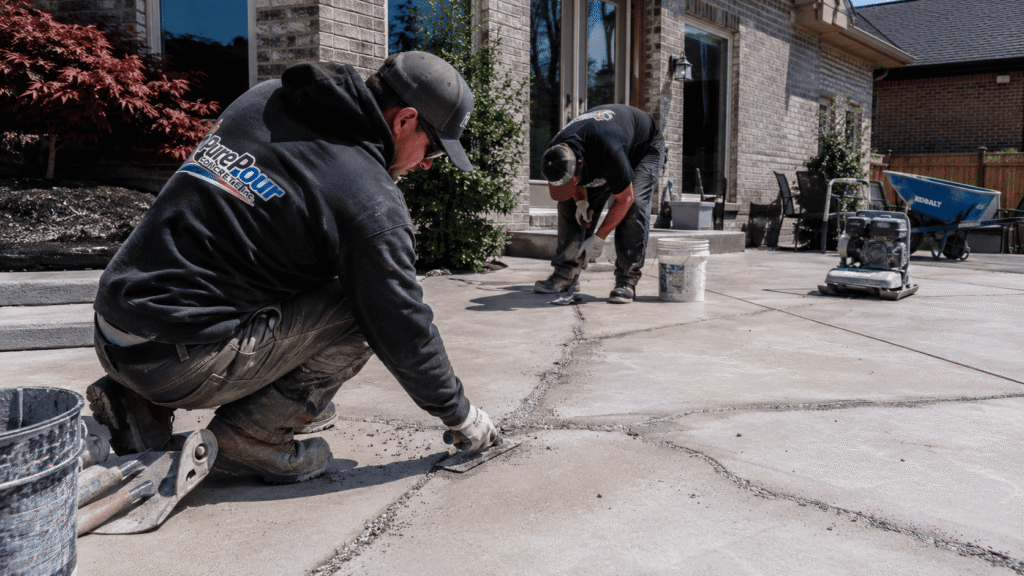
Over 70% of concrete damage in Canada is directly attributable to water penetration and subsequent freeze-thaw cycles—a reality every homeowner in Southern Ontario knows intimately. That hairline crack you noticed last fall isn’t just a cosmetic issue; it’s an open invitation for moisture that can compromise your entire patio slab. Understanding the early warning signs for Concrete Patio Repair in 2026: Signs Your Patio Needs Repair and How to Extend Its Lifespan in Kitchener, Waterloo, Cambridge & Guelph is not just about aesthetics; it’s a critical financial decision to protect your property’s value.
This authoritative guide moves beyond generic advice. We will provide a data-driven framework for homeowners in the Kitchener-Waterloo region to diagnose patio problems with precision, understand the specific repair options available, and implement a proven maintenance strategy. Drawing on 2024-2025 industry data and our extensive field experience with residential concrete in Guelph and Cambridge, you will learn how to identify structural vs. surface-level damage, analyze the costs and benefits of different repair methods, and ultimately prevent minor issues from becoming catastrophic failures. This is your definitive resource for preserving the integrity and beauty of your concrete surfaces for years to come.
The Critical Signs: When Does a Concrete Patio Need More Than a Quick Fix?
Identifying the severity of patio damage early is the single most effective way to control repair costs. A 2024 report from the Concrete Repair Association highlighted that repairs addressed within the first 12 months of appearing cost, on average, 60% less than those left untreated for three years or more. Homeowners in Kitchener need to become fluent in the language of concrete distress.
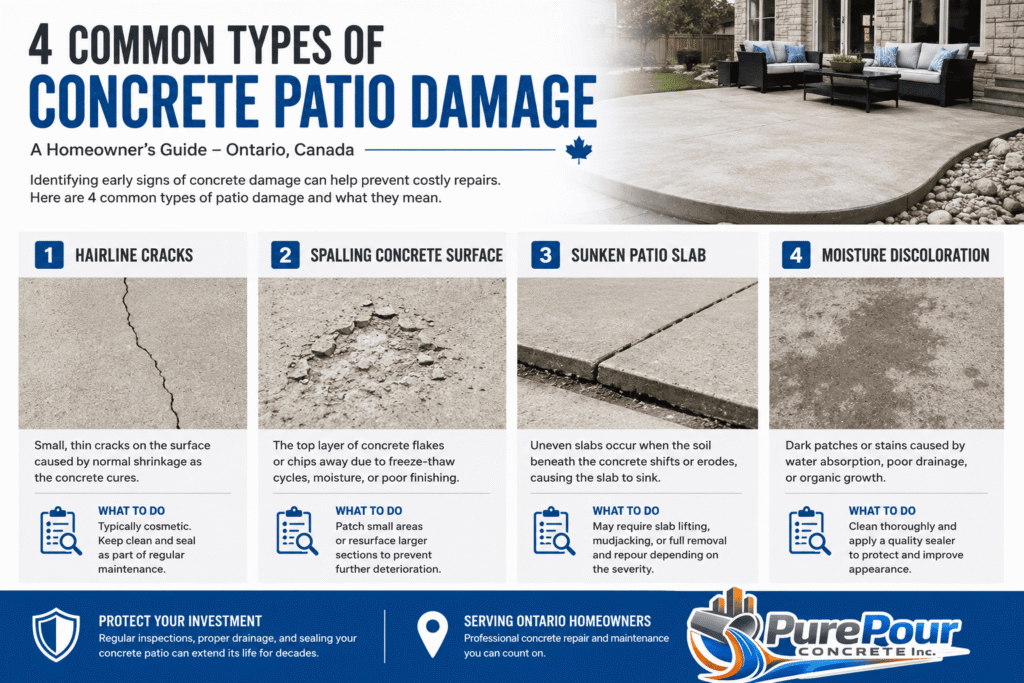
What are the most common types of concrete patio damage?
Direct Answer: The most common types of concrete patio repair damage include surface cracks (hairline and wider), spalling (flaking or peeling), heaving or sinking due to ground settlement, and discoloration from moisture or chemical exposure. In Ontario, damage from the freeze-thaw cycle is particularly prevalent, leading to progressive structural issues.
- Cracks: Not all cracks are equal. Hairline cracks (less than 1/8 inch) are often cosmetic. However, wider, deep, or expanding cracks signal underlying structural issues, such as soil settlement or an improperly prepared sub-base. A key diagnostic test we perform is monitoring a crack’s width over several months. If it widens, immediate professional assessment is required.
- Spalling and Pitting: This is when the surface of the concrete flakes or peels away, leaving a pocked, rough texture. Spalling is a direct result of moisture penetrating the concrete’s surface and freezing. The expanding ice pops off the top layer. It’s an early indicator that your concrete’s original seal has failed and an urgent sign that concrete patio repair is needed before the damage accelerates.
- Sinking or Heaving: Is one corner of your patio lower than the rest? Does water pool in areas where it used to drain? This indicates a problem with the gravel sub-base beneath the slab. Common causes in Waterloo and Cambridge include soil erosion from poor drainage (e.g., misdirected downspouts) or soil compaction over time. A patio slab that has sunk more than an inch often requires professional slabjacking or foam injection to correct.
- Discoloration and Stains: While often viewed as cosmetic, persistent dark spots can indicate chronic moisture issues. If an area remains dark long after the rest of the patio has dried, it suggests the concrete in that spot is highly porous and holding water, making it a prime candidate for future spalling and cracking.
Ignoring these signs transforms a straightforward repair, like an epoxy crack injection or a concrete overlay, into a full-scale, high-cost replacement project. The transition from a simple fix to a major problem is often faster than homeowners expect, especially with our region’s harsh winters.
Why Patios in Kitchener-Waterloo Are Uniquely at Risk: Understanding Ontario’s Freeze-Thaw Cycle
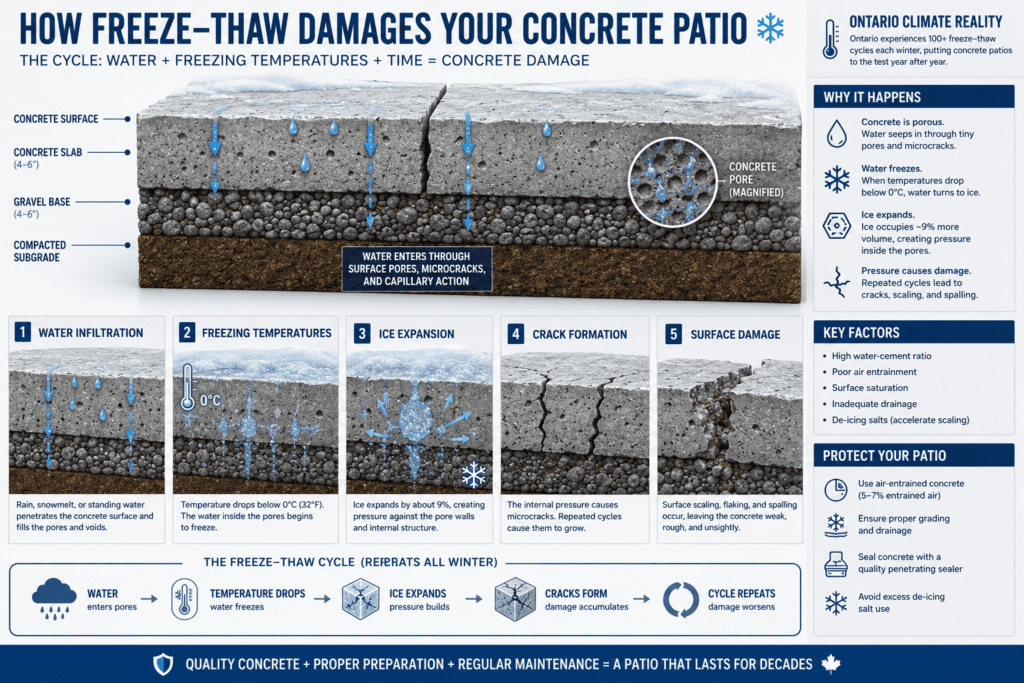
The climate in Southern Ontario presents a formidable challenge for any exterior concrete structure. The Cement Association of Canada‘s 2023 climate report notes that regions like Kitchener, Waterloo, and Guelph experience, on average, 100-120 freeze-thaw cycles per year. This constant expansion and contraction is the primary antagonist in your patio’s story.
Freeze-Thaw Defined: This cycle occurs when water penetrates the porous surface of concrete, freezes, and expands by approximately 9% in volume. This expansion exerts immense internal pressure (up to 30,000 psi) on the concrete. When the ice thaws, it leaves a slightly larger void, which then collects more water for the next freeze. Each cycle progressively breaks down the concrete from the inside out.
In our experience working on residential concrete projects from stamped concrete patio repair to concrete driveways across the region, a properly sealed patio can withstand this cycle for decades. However, once the protective sealant wears off (typically every 2-4 years), the concrete is left vulnerable. A single winter with heavy moisture can be enough to initiate spalling on an unsealed 5-year-old patio. This is why a proactive sealing schedule is non-negotiable for extending the lifespan of your concrete assets, from your front walkway to your pool deck.
Concrete Patio Repair in 2026: Signs Your Patio Needs Repair and How to Extend Its Lifespan in Kitchener, Waterloo, Cambridge & Guelph — Your Options
Once you’ve diagnosed the issue, selecting the correct repair method is crucial. Choosing an inappropriate fix—like using a simple caulk for a structural crack—is a waste of time and money. Here we break down the most effective professional repair solutions for homeowners in the Tri-Cities area, comparing their application, cost, and longevity.
Comparison of Concrete Patio Repair Methods (2026 Estimates for Kitchener-Waterloo Region)
| Repair Method | Best For | Estimated Cost / Sq. Ft. | Projected Lifespan |
|---|---|---|---|
| Crack Filling (Epoxy/Polyurethane) | Isolated, non-structural cracks (1/8″-1/2″ wide) | $8 – $15 per linear foot | 5 – 10 years |
| Concrete Resurfacing/Overlay | Widespread spalling, pitting, staining, multiple hairline cracks | $7 – $12 | 8 – 15 years |
| Slabjacking (Poly-Lifting) | Sunken or uneven slabs with stable sub-soil | $5 – $25 (Varies by void size) | Permanent (if underlying water issue is fixed) |
| Partial or Full Replacement | Severe structural damage, shattered slab, failed sub-base | $18 – $30+ | 25 – 40+ years |
How do you fix a damaged concrete patio?
Direct Answer: Fixing a damaged concrete patio repair depends on the type of damage. Minor hairline cracks can be filled with elastomeric caulk. Spalling and surface damage are best treated with a concrete resurfacer or overlay. Sunken slabs can be lifted with polyurethane foam injection (slabjacking). Extensive structural damage often requires partial or full replacement.
- Crack Repair (Epoxy/Polyurethane Injection): For cracks wider than a credit card but not indicating major settlement, injecting a structural epoxy or flexible polyurethane is the gold standard. Unlike hardware store fillers, these materials bond the concrete back together, restoring its structural integrity and creating a waterproof seal. This is a targeted, cost-effective solution for isolated issues.
- Concrete Resurfacing (Overlay): This is the ideal solution for widespread spalling, pitting, and multiple fine cracks. A polymer-modified cement overlay is applied over the entire existing, prepared patio surface at a thickness of 1/4 to 1/2 inch. This not only repairs the damage but also provides a brand new, durable, and aesthetically pleasing finish. It’s a key part of concrete patio repair that allows for new stamped or decorative finishes on an old slab.
- Slabjacking (Poly-Lifting): For sunken or uneven slabs, slabjacking is a revolutionary technique. Small holes are drilled into the slab, and a high-density, structural polyurethane foam is injected beneath it. The foam expands, lifting the concrete back to its original position and stabilizing the soil beneath. It is significantly less invasive and more cost-effective than demolition and replacement. Data from industry leader PolyLevel shows this method is 50-70% cheaper than replacement and the patio is usable within 30 minutes.
- Full Replacement: In cases of extreme damage—where the slab is shattered into multiple pieces, reinforcing steel is heavily corroded, or the sub-base has completely failed—replacement is the only viable long-term solution. While it is the most expensive option, it allows for a complete redesign and ensures a proper foundation and drainage plan for decades of performance.
Choosing the right option requires professional diagnosis. A common mistake we see in Guelph is homeowners attempting a cosmetic resurfacing on a patio with a severe settlement problem, only to have the new surface crack within a year.
The Cost of Neglect vs. Proactive Repair: A Financial Breakdown for Guelph & Cambridge Homeowners
Delaying concrete repair is never a cost-saving measure. The principle of compounding applies as much to concrete degradation as it does to investments. According to a 2023 report by the National Association of Realtors, exterior improvement projects that enhance curb appeal—like a well-maintained patio—can recoup over 85% of their cost at resale. A cracked, sinking patio does the opposite, actively detracting from your property’s value.
Let’s analyze a typical 400 sq. ft. concrete patio scenario in Cambridge, ON:
- Year 1 – Proactive Repair: A few hairline cracks and minor spalling appear. A professional repair involving crack sealing and a new coat of high-quality penetrating sealer costs approximately $800 – $1,200. The patio’s lifespan is extended by 5-7 years.
- Year 3 – Reactive Repair: The unsealed cracks have widened. Spalling now covers 30% of the surface. The job now requires extensive grinding and a full concrete overlay. The cost escalates to $3,500 – $5,000. The underlying slab is saved, but the cost has quadrupled.
- Year 5 – The Cost of Neglect: The sinking slab has now caused a negative grade, directing water towards the home’s foundation. The Institute for Catastrophic Loss Reduction has linked such issues to a 25% increase in basement water damage claims in Canada. The patio is beyond saving. A full demolition and replacement project now costs $12,000 – $16,000, not including potential foundation repair costs.
This progression demonstrates that investing in timely concrete patio repair in 2026 and ongoing maintenance in the Kitchener-Waterloo area provides one of the highest returns on investment for any home maintenance task. It’s not an expense; it’s asset protection.
Extending Your Patio’s Lifespan: A Proactive Maintenance Schedule for Southern Ontario
Durability is not an accident; it is the result of a deliberate and consistent maintenance plan. For homeowners in Kitchener, Waterloo, Cambridge, and Guelph, this plan revolves around two key principles: keeping water out and managing stress. Following this schedule will dramatically extend the life of all your exterior concrete, from the patio and pool deck to your driveway and walkways.
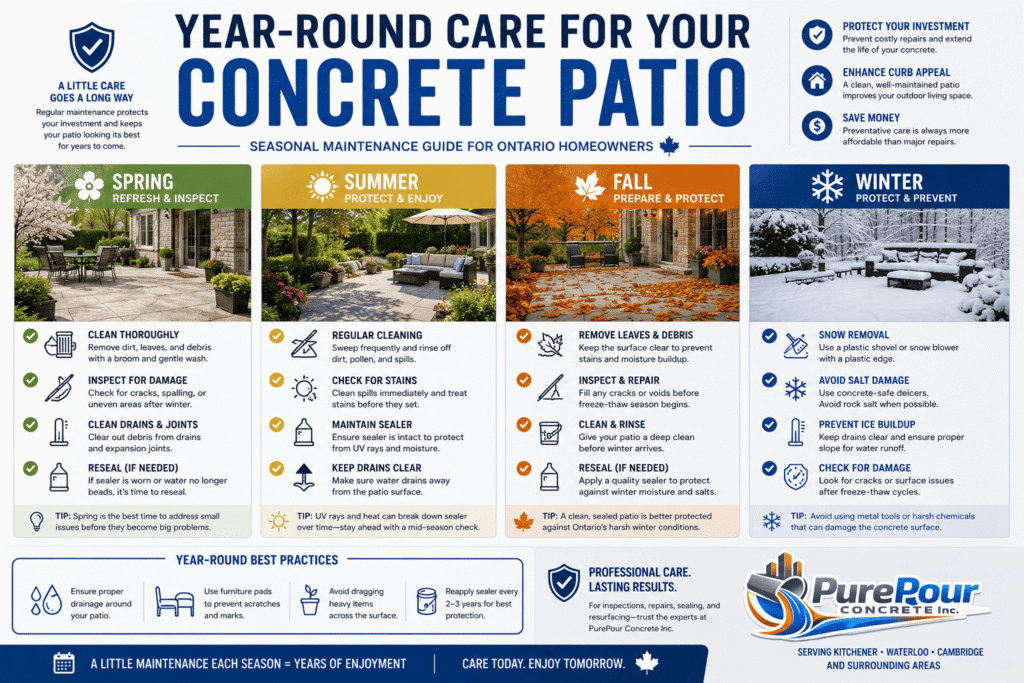
Annual Concrete Maintenance Checklist for Ontario Homeowners
| Season | Primary Task | Pro Tip for Maximum Efficacy |
|---|---|---|
| Spring (April-May) | Inspect & Clean | Photograph any new cracks next to a ruler for measurement. This creates a data log to track movement over time. |
| Summer (July-Aug) | Seal & Repair | Apply sealer on a cool, overcast day to prevent it from drying too quickly, which ensures deeper penetration and a better bond. |
| Fall (Oct-Nov) | Clear Debris & Drainage | Use a leaf blower to clear joints and cracks of debris before winter. Trapped debris holds moisture and accelerates damage. |
| Winter (Dec-Mar) | Protect from Chemicals | Keep a bucket of sand or concrete-safe de-icer by the door. Never use rock salt—it can cause surface damage in a single season. |
How can I make my concrete patio repair last longer?
Direct Answer: To make your concrete patio last longer, the most critical step is to have it professionally sealed every 2-3 years with a high-quality penetrating sealer. Additionally, ensure proper drainage away from the slab, promptly clean spills, avoid using de-icing salts, and address minor cracks as soon as they appear. Taking a proactive approach to concrete patio repair can help prevent water intrusion and costly structural damage.
Follow this simple, season-by-season checklist:
- Spring (April/May):
- Action: Conduct a thorough inspection after the snow melts. Look for new cracks, spalling, or heaving that occurred over the winter. Photograph any changes.
- Action: Power wash the surface to remove dirt, grime, and any residual de-icing salts (which are extremely corrosive). Use a fan-tip nozzle and maintain a distance of at least 12 inches to avoid damaging the surface.
- Summer (July/August):
- Action: Action: This is the ideal time for sealing and repairs due to the dry, warm weather. If it has been 2-4 years since your last seal, schedule a professional application. A quality sealer is your number one defense against the freeze-thaw cycle and can significantly reduce the need for future concrete patio repair.
- Action: Spot-treat any new oil or organic stains to prevent them from penetrating deeply.
- Fall (October/November):
- Action: Clear all leaves and debris from the patio. Decomposing organic matter can cause stubborn stains and hold moisture against the surface.
- Action: Ensure all downspouts and drainage channels around the patio are clear and directing water far away from the slab edges. This prevents soil erosion and foundation issues.
- Winter (December-March):
- Action: Never use de-icing salts (sodium chloride or calcium chloride) on your concrete patio. These chemicals drastically accelerate surface degradation. Use sand or a concrete-safe ice melt product instead.
- Action: Use a plastic shovel for snow removal to avoid scraping or chipping the concrete surface.
This disciplined approach is what separates a patio that lasts 10 years from one that lasts 30. Regular maintenance and timely concrete patio repair can help homeowners avoid costly replacements while preserving the appearance, safety, and value of their outdoor living space.
Beyond the Patio: How Holistic Concrete Care Protects Your Entire Property Value
Your concrete patio does not exist in isolation. It is part of an interconnected system of concrete assets that contribute to your property’s function, safety, and value. The same forces that destroy a patio—water, settlement, freeze-thaw cycles—are also at work on your driveway, walkways, garage slab, and even your home’s foundation. A holistic approach to concrete maintenance is essential.
In our experience, a homeowner who neglects their patio is often unknowingly neglecting their driveway and sidewalks too. A cracked and sinking driveway isn’t just an eyesore; it can be a trip hazard and channel water directly towards your garage foundation. A crumbling concrete walkway can negatively impact curb appeal and pose a liability risk. The health of one concrete structure is often indicative of the health of all of them. Investing in professional concrete patio repair at the first sign of damage can help homeowners avoid costly repairs, improve curb appeal, and extend the lifespan of all surrounding concrete surfaces.
By partnering with a full-service concrete contractor who understands the entire residential system—from pouring new concrete foundations and basement floors to decorative stamped concrete overlays and critical repairs—you gain a strategic ally. We can identify systemic issues, such as a property-wide grading problem, and devise a comprehensive plan that addresses the root cause, not just the symptoms. This integrated strategy for all your concrete—patio, driveway, foundation—is the ultimate way to protect your single largest investment: your home.
Areas We Serve
Pure Pour Concrete proudly serves homeowners throughout:
• Kitchener
• Waterloo
• Cambridge
• Guelph
• Ayr
• Baden
• Breslau
• Elmira
• New Hamburg
• St. Jacobs
Whether you need concrete patio repair, patio resurfacing, patio leveling, or decorative concrete restoration, our team proudly serves homeowners across Waterloo Region and surrounding communities.
Take Action on Your Concrete Patio Repair in 2026
Waiting for a small concrete issue to resolve itself is a losing strategy, especially in the demanding climate of Southern Ontario. The difference between a minor repair and a full replacement is often just a couple of seasons of neglect. As we’ve detailed, proactive diagnosis and timely intervention are paramount.
Here are your key takeaways:
- Diagnose Early: Regularly inspect your patio for cracks, spalling, and sinking. These are not cosmetic flaws but urgent warnings of accelerating damage.
- Understand the Enemy: The freeze-thaw cycle in Kitchener, Waterloo, Cambridge, and Guelph is relentless. Sealing your concrete every 2-4 years is your best defense.
- Choose the Right Solution: From polyurethane injection for lifting slabs to resurfacing for surface damage, a professional diagnosis ensures you get the right fix the first time.
- Act Decisively: The cost of concrete patio repair increases exponentially with time. A proactive approach saves thousands in the long run and protects your home’s value.
Taking action early is the most effective way to protect your patio, your property’s value, and your long-term maintenance budget.
FAQ
How much does professional concrete patio repair cost in Kitchener?
Professional concrete patio repair in Kitchener typically costs between $7-$25 per square foot, depending on the method. Simple resurfacing averages $7-$12/sq. ft., while slab lifting (poly-jacking) can range from $5-$25/sq. ft. Full replacement is the most expensive, often exceeding $20/sq. ft.
Can I repair a stamped concrete patio myself?
DIY repair for stamped concrete is not recommended. Matching the intricate pattern, texture, and color requires specialized tools, materials, and techniques. An improper repair is highly visible and can decrease your property value. Professional repair can seamlessly blend patches, preserving the original decorative look.
Is it cheaper to repair or replace a concrete patio?
It is almost always cheaper to repair a concrete patio. Professional repairs like resurfacing or slabjacking cost, on average, 50-70% less than a full demolition and replacement. Replacement only becomes cost-effective when the slab is structurally shattered or has severe sub-base issues.
How long does concrete resurfacing last?
A professionally installed concrete resurfacing (overlay) lasts between 8 to 15 years. Longevity heavily depends on proper surface preparation, the quality of the polymer-modified material used, and consistent maintenance, including resealing the new surface every 2-4 years to protect it from moisture and wear.
What is the best material to fill large cracks in a concrete patio?
For large, structural cracks in a concrete patio repair, a two-part structural epoxy or a flexible polyurethane injection is the best material. Unlike rigid fillers, these professional-grade materials bond the concrete together and can accommodate minor movement, preventing the crack from re-forming. This restores up to 95% of the original strength.
How do I know if my patio crack is a structural problem?
A patio crack is likely structural if it’s wider than 1/4 inch, runs the full depth of the slab, or has one side higher than the other (vertical displacement). If the crack continues to grow wider over time, it’s a definitive sign of an underlying issue with the base or soil settlement.
Get a Free Concrete Patio Repair Estimate in Kitchener, Waterloo, Cambridge & Guelph
If you’ve noticed cracks, sinking, spalling, or surface damage on your patio, addressing the problem early can help you avoid costly repairs in the future.
At Pure Pour Concrete, we provide professional concrete patio repair, resurfacing, patio leveling, and decorative concrete restoration services throughout Kitchener, Waterloo, Cambridge, Guelph, and surrounding communities.
Why Homeowners Choose Pure Pour Concrete
✅ Experienced Local Concrete Specialists
✅ High-Quality Repair Materials
✅ Long-Lasting Repair Solutions
✅ Transparent Pricing
✅ Free Estimates & Professional Advice
Request Your Free Estimate Today
Whether your patio needs crack repair, resurfacing, slab lifting, or a complete restoration, our team is ready to help.
Contact Pure Pour Concrete today for a free, no-obligation estimate and discover the most cost-effective solution for your patio repair project.